Hourly ·
China Puts Its AI on the Export List
Beijing wants licences for the blueprints behind its frontier models — 40 technologies, 23 of them AI — and the registration rule is already live. The chip war now runs in both directions.
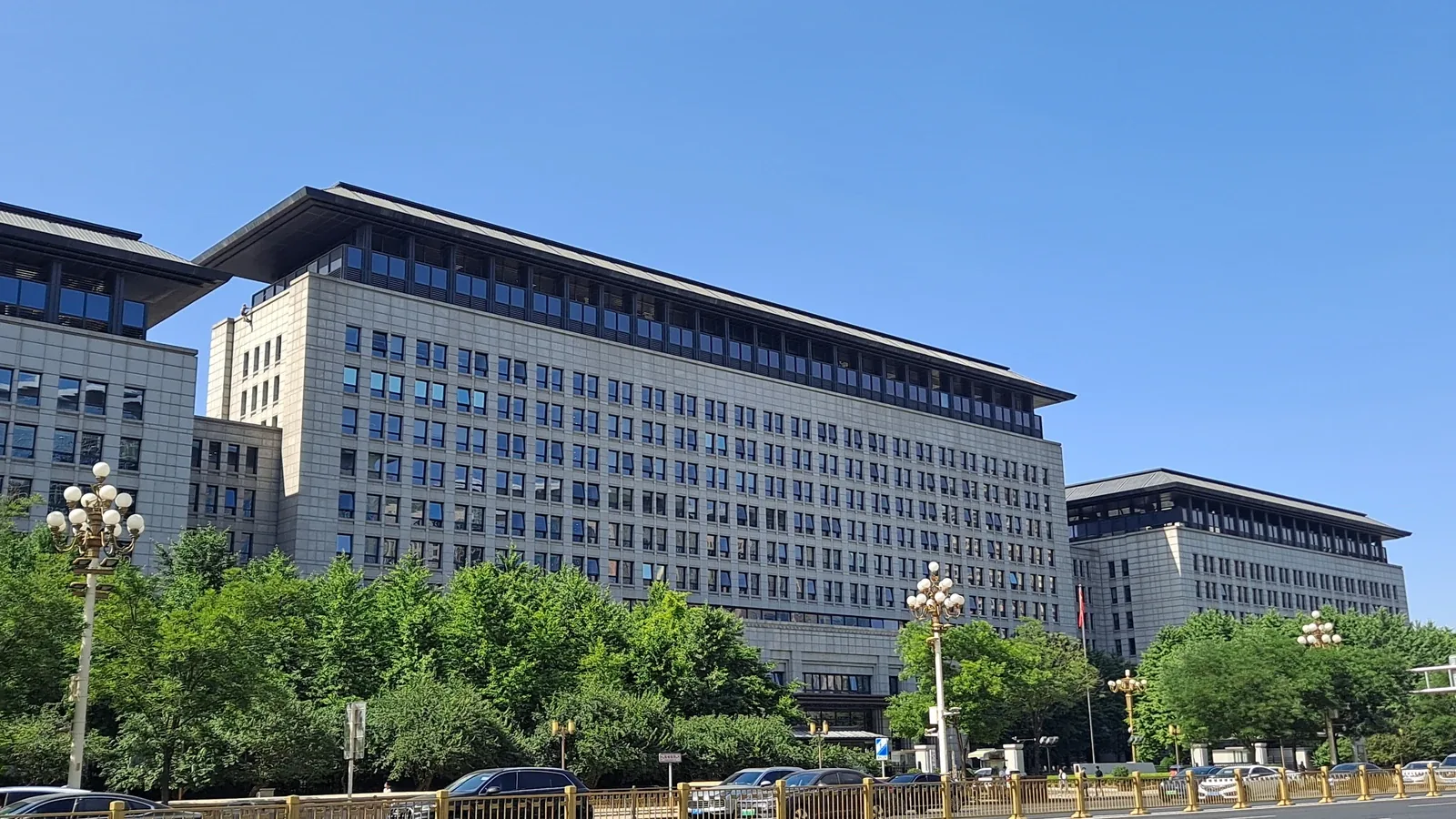
On Friday, China's Ministry of Commerce and Ministry of Science and Technology published a draft revision to the catalogue of technologies prohibited or restricted from export. It adds 40 items: 23 in artificial intelligence, 12 in solar manufacturing, five in biomedicine. Fourteen would be banned outright; 26 would require export licences. Public comment runs until November 15.
The draft is not yet law. The registration requirement is. Since Friday, any Chinese company transferring ownership of a listed technology, licensing it overseas, or moving a domestic technology owner under foreign control must file with MOFCOM before the deal proceeds — including transactions that are already underway. Registration is not approval. It is visibility, granted in advance.
For AI, the thresholds are explicit. Models trained on data classified as "core data" — the tier reserved for national security — would be prohibited from export. So would AI agents built for national defence, critical information infrastructure or core government systems, and systems with strong offensive cyber capability. Important-but-not-core models sit in the restricted tier: those trained on "important data", or built with 10²⁶ FLOPs of compute, or holding two trillion parameters, or ranking in the global top ten on public benchmarks. Chip and advanced memory design technologies, clusters of 10,000 or more accelerators, voiceprint recognition and Chinese-language translation are also restricted.
Then come the carve-outs, which are the interesting part. Anything already published — open-source weights, academic papers — is out of scope. And access is not transfer: serving overseas users through an API, a website, an app or SaaS does not count as exporting the model, provided the model stays on Chinese infrastructure. Lightweight deployment on overseas devices is also excluded. Restricted technology can still be exported under an "automatic licensing" route when the Chinese party keeps control — its own overseas cloud, joint research, standards work.
That distinction is precise, and it tells you what Beijing is protecting. Inference revenue can travel. Weights, source code and on-premise deployments cannot, at least not without paperwork. DeepSeek and Alibaba can keep selling tokens to the world; they cannot hand over the factory.
Solar is where the draft gets unusual. The 12 additions cover polysilicon, wafers and cell manufacturing — and, for the first time, the core equipment that embodies those processes. Perovskite cell technology would be prohibited; heterojunction (HJT) cells restricted. Extending controls to machinery is not an abstraction: it reaches the export of entire production lines, the thing Chinese solar firms have been building abroad. Baker McKenzie's analysis reads the equipment clause as aimed squarely at overseas deployment of Chinese solar manufacturing capacity.
Biomedicine follows the same logic. Cell and gene therapy, small nucleic acid drugs and pathogenic microbiology are added. Pathogenic microorganism technology is prohibited outright. For the other two, the prohibition targets reusable platform technologies when IP ownership changes hands; licensing and contract research remain possible, often under automatic licensing.
A MOFCOM spokesperson said the revision is routine — the latest in a series of updates since the catalogue was first published in 2001 — and does not target any country, region or entity. The timing is hard to read any other way. Washington has spent years tightening controls on the chips and tools China needs to train frontier models. Beijing has now written a list controlling the models themselves, the layer where it has become a net exporter. On the government's own figures, China holds roughly 60 percent of global AI patents, and overseas licensing deals for its innovative drugs passed $130 billion in 2025.
The open-source exemption is the sharpest detail. A weight file released publicly cannot be un-released; once a Chinese lab publishes a model, the export-control apparatus has nothing to register. The list therefore protects what is still private — training data, unreleased checkpoints, chip designs, production equipment — while leaving the open-weight strategy intact. In effect, Beijing has codified the difference between giving away a model and giving away the means to make the next one.
For companies, the practical questions changed this weekend. Not only which chips they can buy, but where their model weights were trained, who controls the entity that owns them, and whether an on-premise deployment in Frankfurt or Ohio now needs a Chinese export registration. M&A diligence has a new line item. So does any architecture diagram that assumes a Chinese model can simply be moved.
The consultation runs to November 15. The final catalogue may shrink or shift. But the direction is set: export controls are no longer a one-way instrument, and the most valuable thing China makes is no longer only physical.
Sources: Forkast, Global Times, Baker McKenzie, The Independent, MOFCOM
中国将人工智能列入出口清单
北京欲获前沿模型蓝图的许可——共有40项技术,其中23项为AI——注册规则已经生效。现在芯片战双向进行。
← 小時報 小時版 · 2026-10-19 00:00 UTC 中國將其前沿模型背后的藍圖列入出口名單 北京要求對40項技術中的23項,包括AI,進行許可證申請;注冊規定已經生效。芯片戰如今雙向進行。 照片來源: EditQ / 公共資源共享協議 (CC BY-SA 4. 0) 星期五,中國商務部和科技部發佈公告表示將在出口名單中列入一些前沿技術模型的設計藍圖,並要求對其中23項技術(包括AI)進行許可證申請;該注冊規定已經生效。
More Hourlies Stories
Content on Anagnorisis is summarized, paraphrased, and editorialized from publicly available sources for length and clarity. Original sources are linked where available. All trademarks belong to their respective owners.